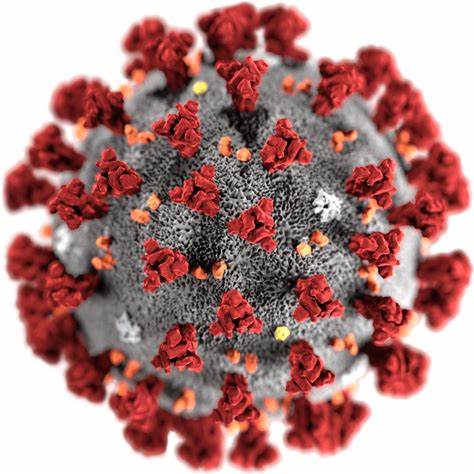
This informative podcast was a talk with Ed Young, a science reporter, on some of the reasons why the COVID-19 virus is so contagious. Interestingly enough, unlike other strands of corona, COVID-19 has a unique spike shape on its surface that is able to form a stronger bond on human cells due to the A2 protein that is already present on humans. A stronger bond means it takes a lesser amount of virus to cause a viral infection. And while some virus on infect the upper airways and can cause mild symptoms or the lower airways to cause more severe symptoms, COVID-19 can infect both, leading to those with mild symptoms to spread it to others more easily. Unlike others phenomena like SARS, COVID-19 is great at infecting humans. New information is learned about this virus everyday so people should stay up to date with the latest news for more facts.
This interview took place on August of 2019 and begins with discussing the trivial nature of presidential “debates” and why the amount of time given is not productive. The conversation then shifts into healthcare reform and Sanders explains his position by contrasting American healthcare with the healthcare of other countries and why their system can work for America. This is followed by Sander’s plan to forgive student loans and different tax methods to pay for it as well as changing the ways in which school give out loans. He then goes into gun control, mental health, and drugs and how background checks can be improved. Lastly, he speaks about climate change and his desire to convince foreign countries on how to live in a more economical friendly economy.
We have all heard the stories of people whose lives have been consumed by social media. The friend who eyes are glued to their phone during important events. Or even the social influencers who become stricken with anxiety and depression from obsessing over how little likes their post received. It seems everywhere you go, psychologist, educators, and the general public seem to give social media a bad label, but does it deserve it? Where is the praise for the good that social media has created?
In fact, there is so much good that social media has to offer beyond the humor of memes and funny videos, that this would be quite a lengthy article if I were to list them all! Instead, it’s best to focus on what I believe are the two main benefits that social media has created – one as a benefit to society as a whole and the other being a more personal benefit.
For society, social media has created a platform of social outreach, crowdfunding, and has allowed people to work together in ways previously unheard of. By use of websites such as Patreon, people can now engage and support one another at the click of a button, compounded even further when they share a post and spread the message to their friends. Projects and charities that once needed to invest in advertising can now make hundreds of thousands within a day
The concept of working together even expands into the field of criminology. Facebook groups and threads on Reddit have led to missing people being found, frauds being exposed, and criminals being prosecuted – all from the combined effort and information sharing from people who sit in the comfort of their own home.
The second, more personal and perhaps most important benefit is that it gives people who are otherwise social outliers in a society to express their selves and connect with others like never before. Social media has allowed the voice of individuals who are repressed by their family, general society, or the government, and can now make a change in a way that even voting cannot achieve. In fact, social media has often been attributed to the success of nearly all modern revolutions.
The main point to take away from this is that social media has proven that we necessarily need others around us to have fulfilling relationships or to make a great impact on someone else. We only need a platform to express ourselves and interact with others, and in the modern age, social media is that platform.
“Knowledge is power”, and the free and ease of access to knowledge is a fundamental aspect of a democratic society as it empowers the people. Not only does it assist in protecting our rights, but it also gives the common man the potential to learn things that were once only available to researchers and academics. Surely no one in contemporary America will deny or reject the goodness that the democratization of knowledge offers.
But, like with most things in life, there is a caveat—one that is often ignored despite us having daily experience with it and sometimes being guilty of it—and it is the fact that people can post false information, intentionally or not, which could cause harm, financial ruin, and in some cases widespread chaos. A light but very real example of this is when internet trolls created false advertisements that caused people to completely destroy their iPhone by bending them until the broke, submerging them in water, and even microwaving them! Needless to say, a lot of phones were destroyed.
There have also been many other hoaxes that have led to panic and serious injury once revealed to the public, which begs the question of if we should give individuals the same plausibility of truth as we give towards professionals and government institutions? And yet a more penitent question emerges when we go beyond who should be able to give out certain information but then try to dictate what given information should remain in the public realm of easy access.
A common example is when celebrities have their personal lives exposed via the paparazzi or other intrusive recordings, such as when the celebrity Hulk Hogan was unknowingly recorded making quite a few racial statements during the same recording. Even when ignoring the content of his actions, nobody would want private details of their life exposed to the public.
More interesting examples can be seen in situations where the knowledge itself isn’t false or inherently malicious but simply knowing it has lead to less than pleasant thoughts about the person involved. Such was the case for many people as revealed by a podcast titled Right to be Forgotten by Radiolab, in which those who were charged with committing a crime, with some being found not guilty, began advocating for public information regarding their case to be taken down since many had suffered a loss of employment, an inability to gain employment, or became ostracized from family and friends due to the implications of what kind of person they current are or may have been. Unlike in the past where someone would have to spend hours sifting through documents to find such information and even spend more time trying to spread the message, people can now find and spread the information online at the click of a button which is now as Molly, a member of the podcast, states “… it’s there always and forever.”
Should false information be illegal? Should information that invades someones privacy be scrubbed from the internet? Should otherwise neutral and factual information be removed if has negative effects that could lead to repercussions in someones life? The solution is much more complex than what a simple ‘yes’ or ‘no’ can provide, but the reasoning for both sides is definitely an interesting topic. In my eyes, the reputation we’ve been labeled with from our actions is a natural consequence to whatever crimes we’ve committed, but I do believe that online sources shouldn’t publicize names, especially if one is innocent of a crime.
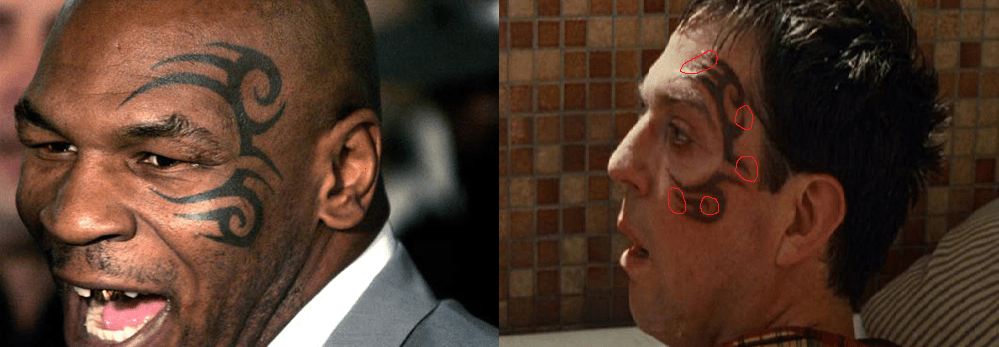
The first reaction I had to the tattoo artist Victor Whitmill filing copyright claims against Warner Brothers was one of bewilderment. Is it even legally possible to sue over such things? If it is or isn’t, should it be? I’m no legal specialist, but as far as I’m concerned, isn’t artwork covered under the first amendment as a form of freedom of expression?
One major issue with the lawsuit is where does the line between who is able to sue begin or end? I’m sure the shirts, cars, and other otherwise minor accessories throughout the movie were also under a patent by someone, so would every clothing company be able to sue as well? Does the tattoo artist of other individuals in the film that have tattoos also get a say? Can a hair stylist have a case because they styled their hair a certain way?
The second and perhaps most important issue I have is that the movie is an obvious comedy. There’s a reason why satirical media and cartoonist haven’t been sued by whatever person or company they’ve referenced or parodied, and that is because parodies are not considered to be subject to copyright infringement. Some will say the tattoo is not a parody because it is an exact copy of the real thing, but that statement is false; which I have crudely illustrated by circling the differences in the length, curvature, and thickness of a few elements of the tattoo in the film compared to Tyson’s actual face tattoo. But even if it were a carbon copy of the original, that wouldn’t take away from the fact its a satirical purpose.
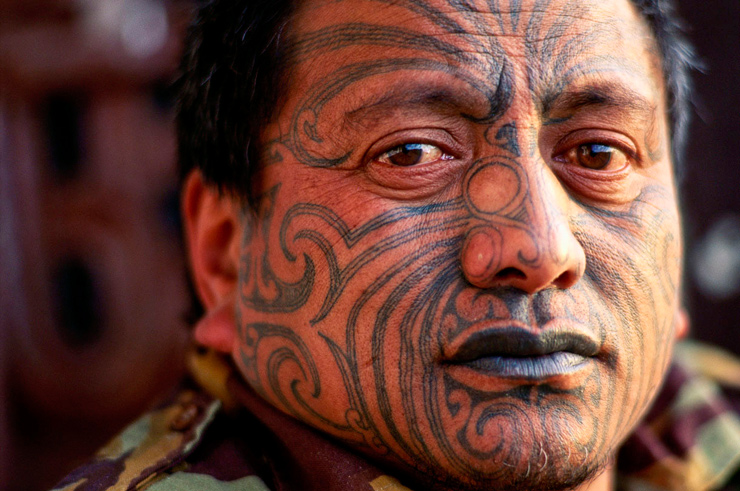
Even more interesting is the fact that this tattoo is inspired by the Maori tribe in New Zealand, and the particular design symbolizes that of a warrior, which Tyson fondly thinks of himself as — and judging by his boxing skills he’s earned it. But this brings the question of if the Maori people themselves have a stake in any of this. What irony would it be if Whitmill was able to sue one of them for using it! According to Tyson himself, he has seen others who had gotten a similar or nearly identical tattoo before Whitmill authored his own and even said to him “Hey! You got my tribe on your face!”, so it is possible that the concept may not be entirely original.
In the end, through some research I’ve discovered that Whitmill has some degree of legal rights over the tattoo since it was copyrighted in his name around 2012 and that Warner Brothers had not only settled the matter privately but were ready to digitally alter the tattoo in the home video version of the movie – through that doesn’t explain why Mike Tyson, who is listed as a co-owner, isn’t enough “permission” for the use of it. The previously mentioned statements are my laymen understanding of the law, but if you a more accurate understanding of copyrights and trademarks, click here.
We all want to be #1. Whether you try to stay above your friends or your neighbors next door, knowing you are better than the competition is often what gives people a peace of mind and security in their relationships and social standing. So even in a stable relationship it is not uncommon to feel uneasy when that very competition is has entered your own home, the place where you should feel the least on your guard.
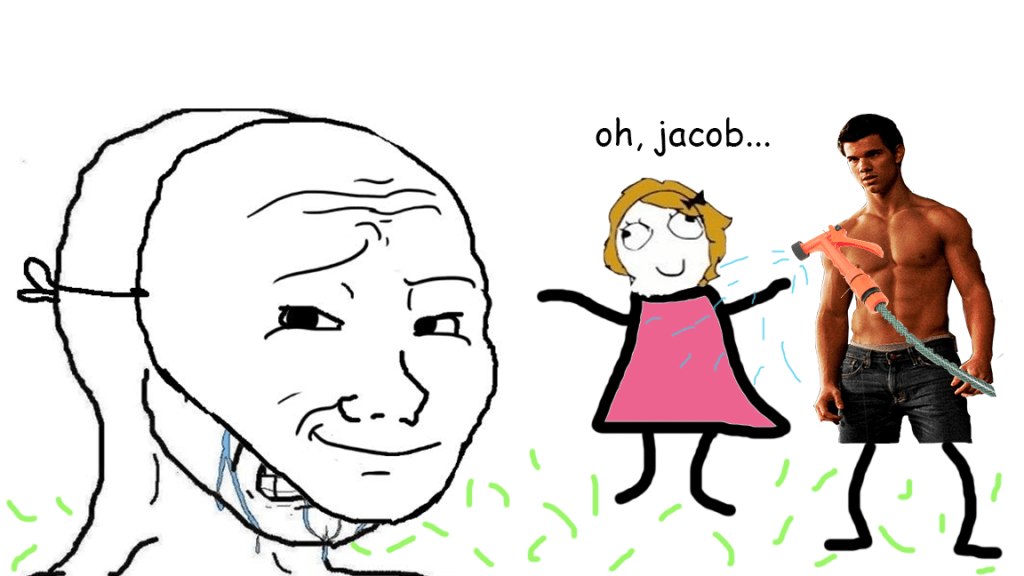
Even more so, what should one do when the competition is both attractive and present on a daily basis? There are no arcane potions to make oneself look beautiful – and we’ve all heard the stories of some maid or baby-sitter being the center of an affair, so the idea of infidelity begins to rear its ugly head, too, along with the thoughts of what one would do if they found out. Though is that likelihood large enough to even merit concern?
Statistically, according to a study published by Journal of Family Psychology, 29.4% of affairs occur with friends and long-term acquaintances, particular those who the adulterer routinely interacts with, such as a helper. Although that percentage may not seem like a lot to you, anything above 1% is risky enough to warrant some kind of precaution (at least for me it is). But should we truly allow insecurity to determine the employment of someone else? If so, then to what extent does it end? Must we also have a say on who our spouses may be friends with since friendships generally have an even higher chance (53.5%) of infidelity compared to daily helpers and acquaintances?
Whether dating or married, it is common for relationships to crumble. Although being cheated on is a more abhorrent way for things to fall apart, I still would be able recognize the futility of trying to remedy the situation and would rather see it as a potential for greater things—improve myself if necessary—and move on with my life. People should recognize the potential for failure or loss in many of the everyday choices we make since we not everything is perfect, and to refuse something or to shield ourselves to the point where there is no actual enjoyment (in this case trust) would be even more exhausting, boring, and stressful than the experience of the actual failure we try to avoid. And to that end, I would not deliberately choose a less attractive worker on the basis of any cosmetic reason, though I thorough I thoroughly understand why others may do just that.
However—and perhaps this is a characteristic flaw of my own pride—I refuse to be an instrument of my own destruction. To lose ones own spouse to competition is a loss in itself, but there is a special and bitter taste in knowing that I was the only who introduced, became acquainted with, and financed my own demise. Such a thought does not merely fade away into the category of lessons learned in life but would permanently linger in my mind whenever I thought of where I would be had I not invited a model to water my garden. So in the end, for the sake of my own pride in the future, I would definitely try to pick a more modest helper and then try my best to subtly convince my spouse to agree. Or I could just do my own chores, but I imagine I would just apply the age old philosophy of if I can afford to not do it, then I won’t.



 Kenneth's Blog