The first reaction I had to the tattoo artist Victor Whitmill filing copyright claims against Warner Brothers was one of bewilderment. Is it even legally possible to sue over such things? If it is or isn’t, should it be? I’m no legal specialist, but as far as I’m concerned, isn’t artwork covered under the first amendment as a form of freedom of expression?
One major issue with the lawsuit is where does the line between who is able to sue begin or end? I’m sure the shirts, cars, and other otherwise minor accessories throughout the movie were also under a patent by someone, so would every clothing company be able to sue as well? Does the tattoo artist of other individuals in the film that have tattoos also get a say? Can a hair stylist have a case because they styled their hair a certain way?
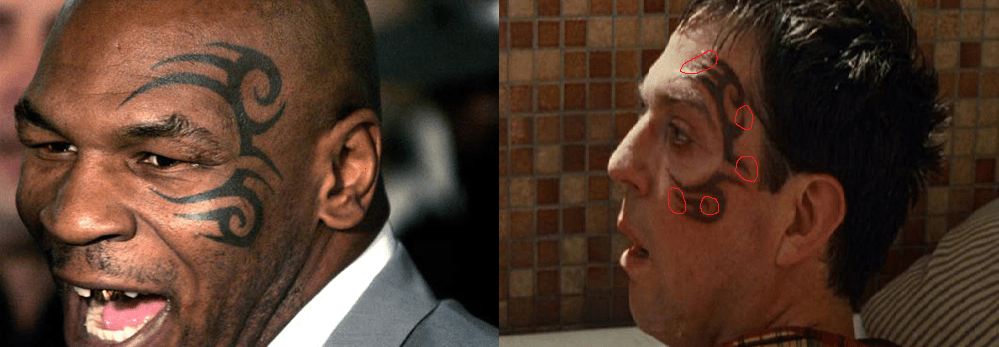
The second and perhaps most important issue I have is that the movie is an obvious comedy. There’s a reason why satirical media and cartoonist haven’t been sued by whatever person or company they’ve referenced or parodied, and that is because parodies are not considered to be subject to copyright infringement. Some will say the tattoo is not a parody because it is an exact copy of the real thing, but that statement is false; which I have crudely illustrated by circling the differences in the length, curvature, and thickness of a few elements of the tattoo in the film compared to Tyson’s actual face tattoo. But even if it were a carbon copy of the original, that wouldn’t take away from the fact its a satirical purpose.
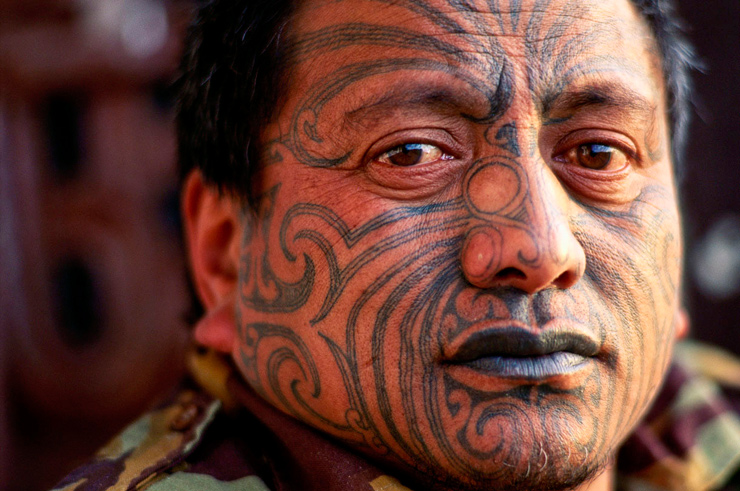
Even more interesting is the fact that this tattoo is inspired by the Maori tribe in New Zealand, and the particular design symbolizes that of a warrior, which Tyson fondly thinks of himself as — and judging by his boxing skills he’s earned it. But this brings the question of if the Maori people themselves have a stake in any of this. What irony would it be if Whitmill was able to sue one of them for using it! According to Tyson himself, he has seen others who had gotten a similar or nearly identical tattoo before Whitmill authored his own and even said to him “Hey! You got my tribe on your face!”, so it is possible that the concept may not be entirely original.
In the end, through some research I’ve discovered that Whitmill has some degree of legal rights over the tattoo since it was copyrighted in his name around 2012 and that Warner Brothers had not only settled the matter privately but were ready to digitally alter the tattoo in the home video version of the movie – through that doesn’t explain why Mike Tyson, who is listed as a co-owner, isn’t enough “permission” for the use of it. The previously mentioned statements are my laymen understanding of the law, but if you a more accurate understanding of copyrights and trademarks, click here.

 Kenneth's Blog